Craftsmanship
Three hundred and twelve parts, in the order they arrive.
A Chronographe 312 is assembled once, by hand, at one of four benches in Plainpalais. Nothing is glued, nothing is pressed in by machine, and nothing is hidden behind a dial. This is the whole of it: the film, the eight components, and the thirty-one hours we spend on surfaces you will mostly never see.
- Parts
- 312
- Jewels
- 37
- Power reserve
- 72 h
- Finishing by hand
- 31 h
The assembly
Seven arrivals.
Ten seconds of film, stretched over seven screens of scrolling. Each part lands in the order it lands at the bench. Take it slowly, there is no hurry and nothing to click.
01 · The screws
Twenty-six screws hold it together.
Each one turned by hand to the same torque. The first parts in, and the last to fail.
02 · The wheels
Cut from solid, never cast.
Blue steel and gold, milled from blanks and polished before they are ever allowed to turn.
03 · The movement
Calibre 312 goes into the case.
Three hundred and twelve parts, thirty-seven jewels, seventy-two hours on one barrel.
04 · The crown and pushers
Start. Stop. Reset.
The only three things you will ever press, and the only parts that must stay sealed while they move.
05 · The dial
Cut away, not printed.
The bridges underneath become the pattern you read the time against. Take the dial off and the drawing is still there.
06 · The bezel
Six screws, and everybody counts them.
Forged carbon, pressed once. The marbling is what happens when the press closes, so it never happens twice.
07 · The crystal
Sapphire, nine hours of polishing.
The last part to arrive. Then the watch is timed for two weeks, signed, numbered and shipped.
-
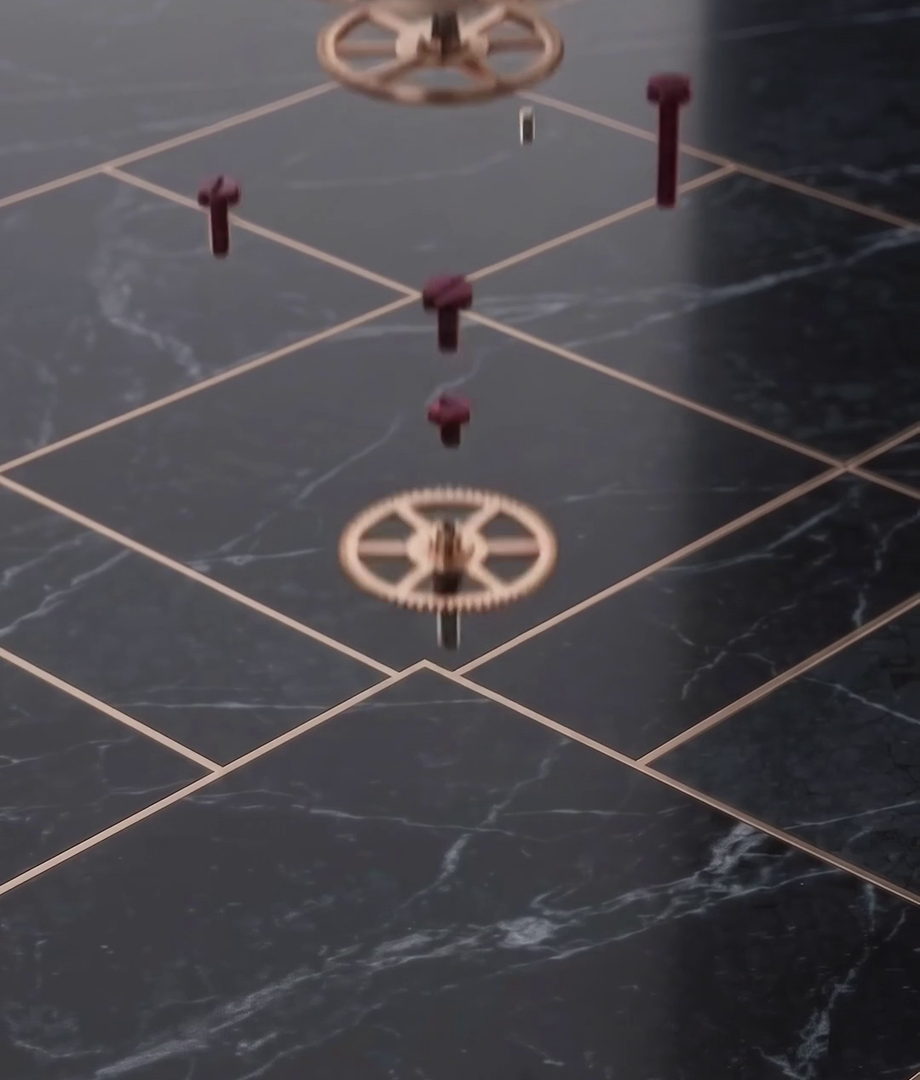
01
The screws
Twenty-six of them, each turned by hand to the same torque. They are the first parts in and the last to fail, and they are the reason a Calibre 312 can be opened, serviced and closed again forty years from now without a single new hole.
-
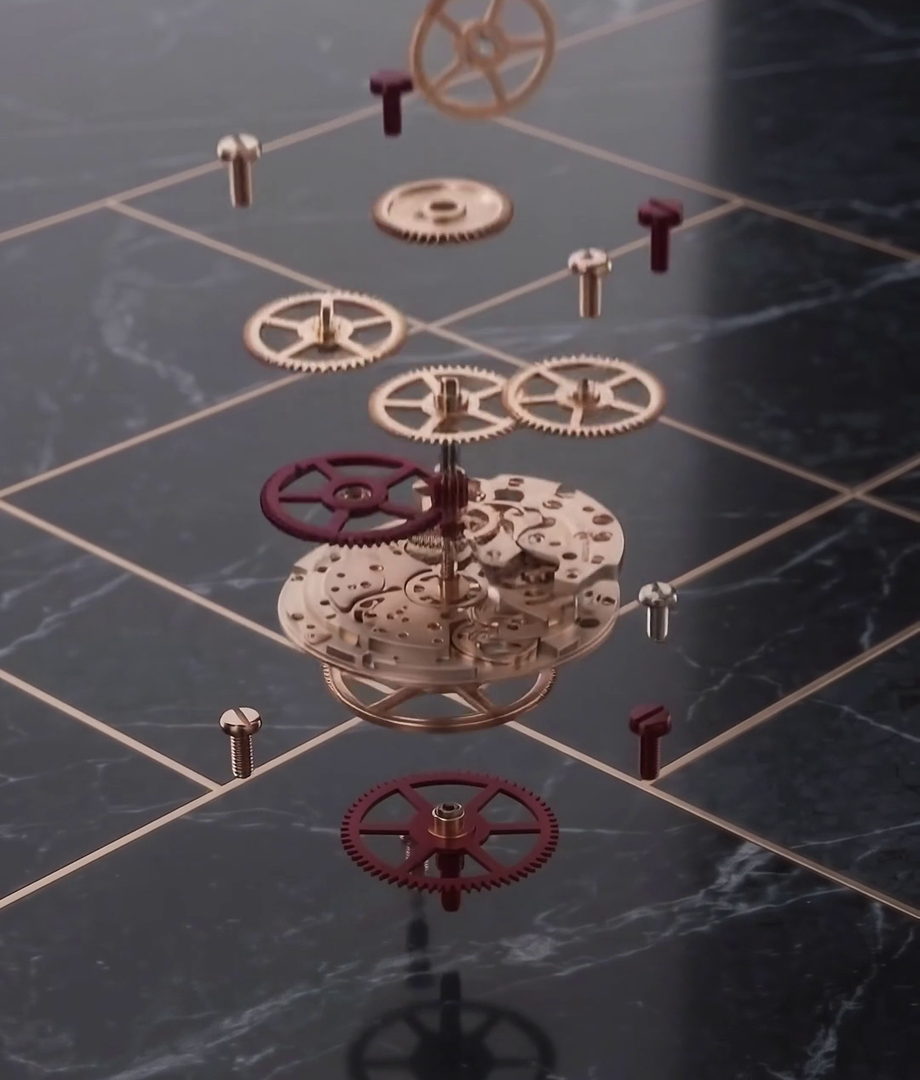
02
The wheels
Blue steel and gold, milled from solid blanks rather than stamped. Every tooth flank is polished before the wheel is ever allowed to turn, because a rough flank wears its neighbour and a worn train is the one fault we cannot finish out later.
-
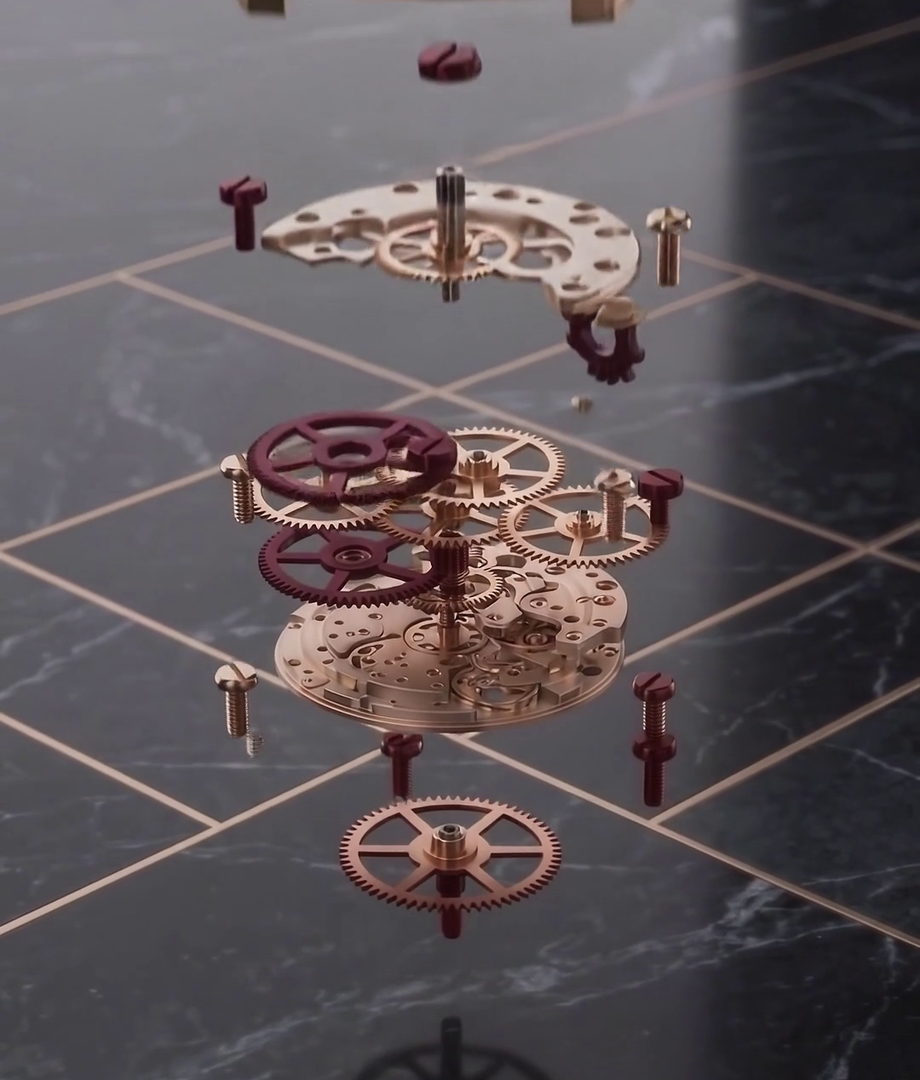
03
The movement
Calibre 312 goes into the case in one piece: hand wound, 4 Hz, seventy-two hours on a single barrel. It was drawn in 1998 and revised eleven times, and every revision took something out rather than adding it.
-
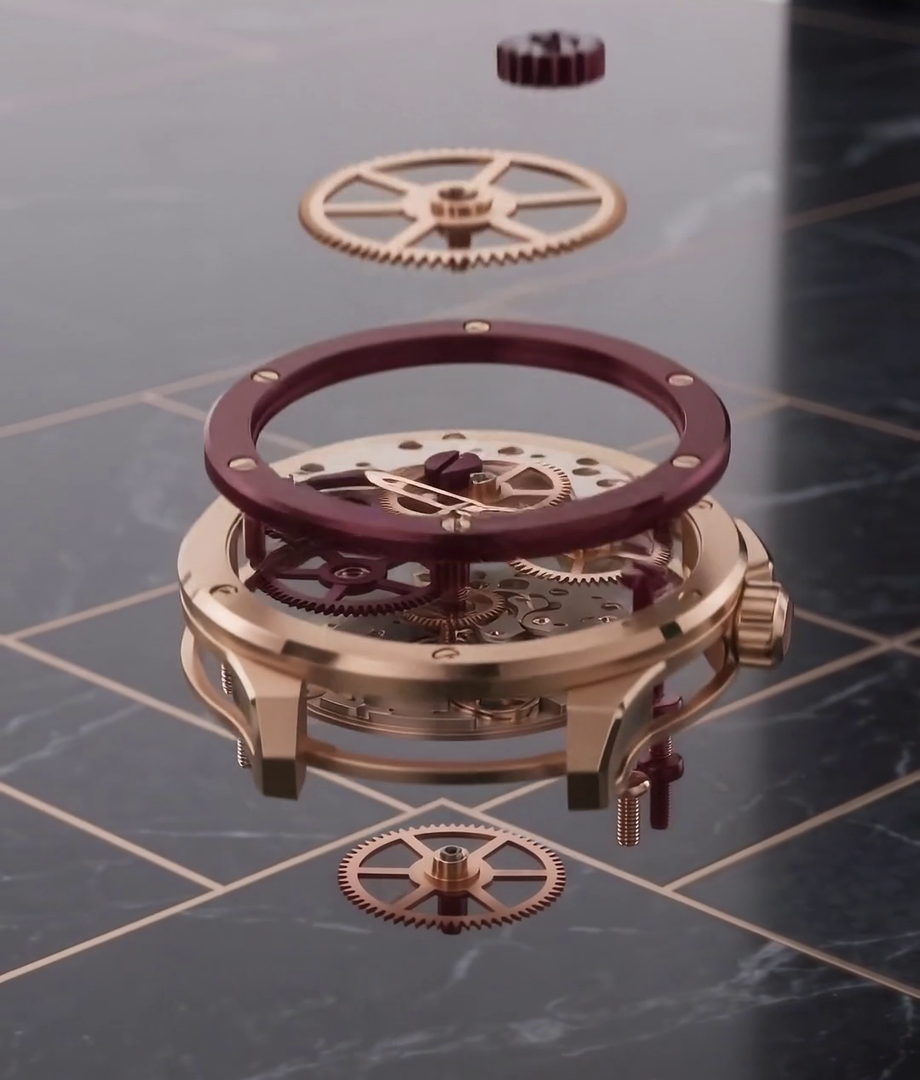
04
The crown and pushers
Start, stop, reset. Three seals in the crown, one in each pusher, and a thread that takes two and a half turns to close. These are the only parts that have to stay waterproof while they move, so they are the only parts we test twice.
-
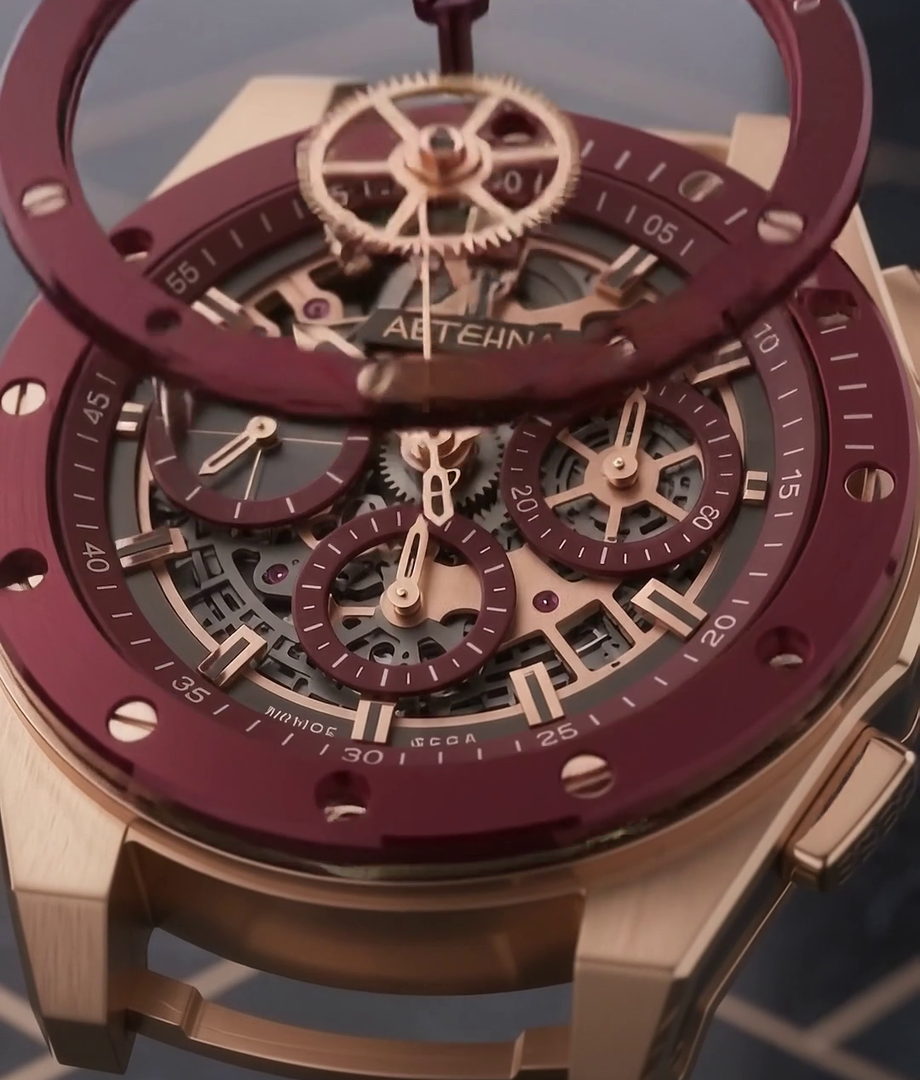
05
The dial
Cut away rather than printed, so the bridges below become the pattern you read the time against. Each opening creates an edge, and each edge is chamfered by hand before the colour goes on.
-
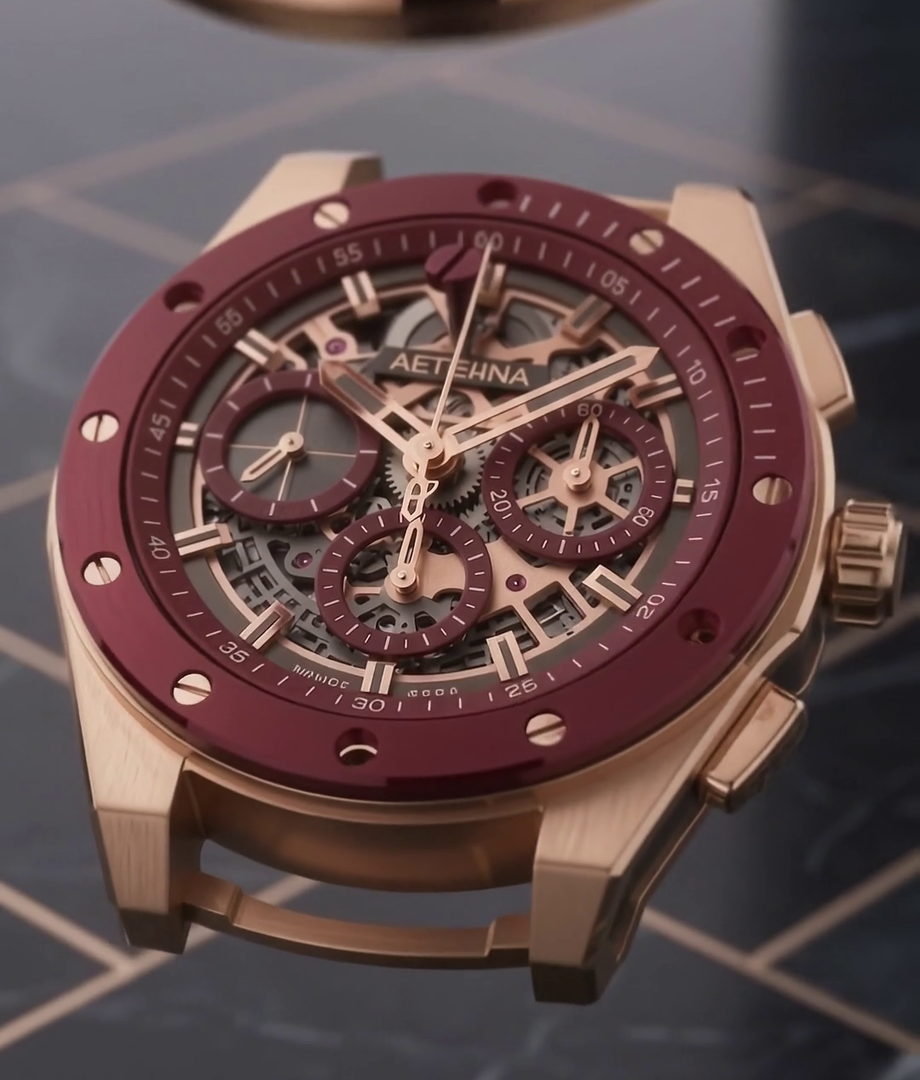
06
The bezel
Six screws hold it, and everybody counts them. The forged carbon is pressed once and the marbling is whatever the press gives us, which is why no two bezels in three hundred and twelve are the same.
-
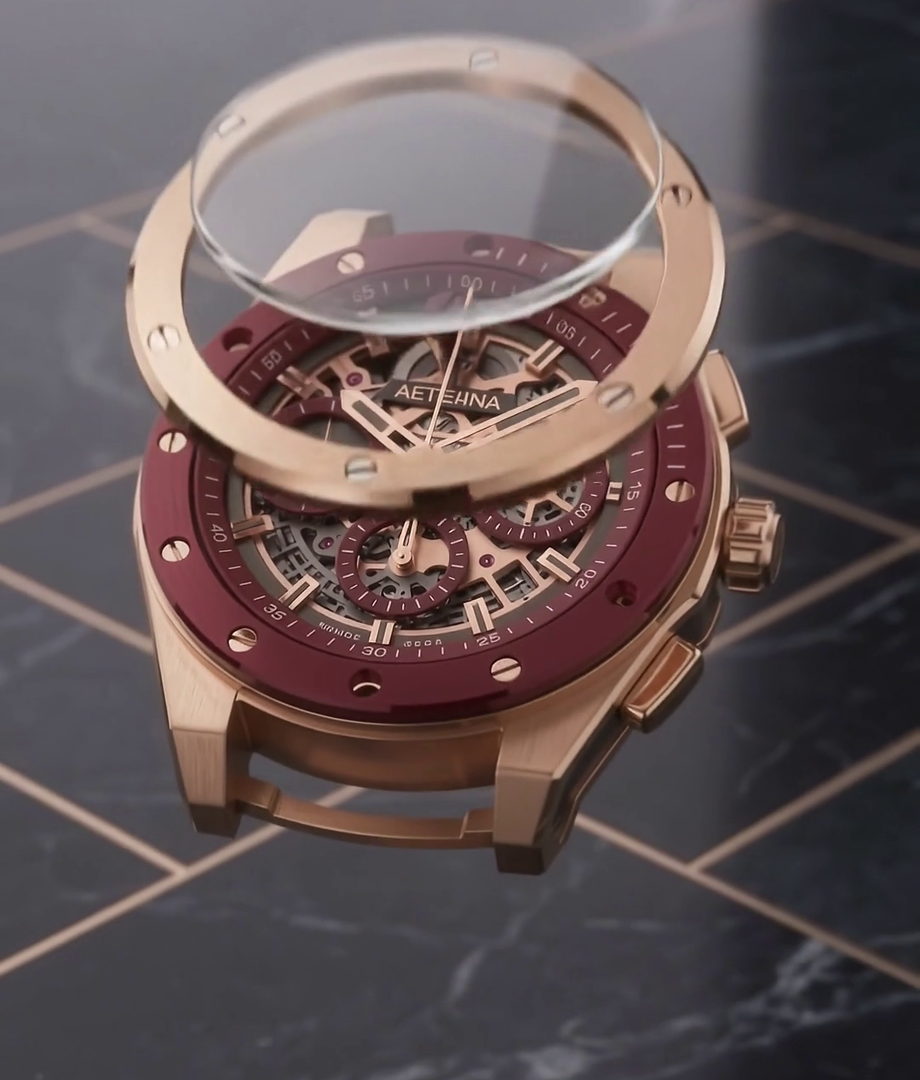
07
The crystal
Sapphire, nine hours of grinding and polishing, coated on both faces with the colourless anti reflective rather than the cheaper blue. The last part to arrive. After it, the watch runs on a timing machine for two weeks before anyone signs it.
The components
Eight parts, in depth.
The home page names them in a sentence each. Here is the longer answer: what every component is, what it costs us in hours, and why it is made this way and not the cheaper way.
-
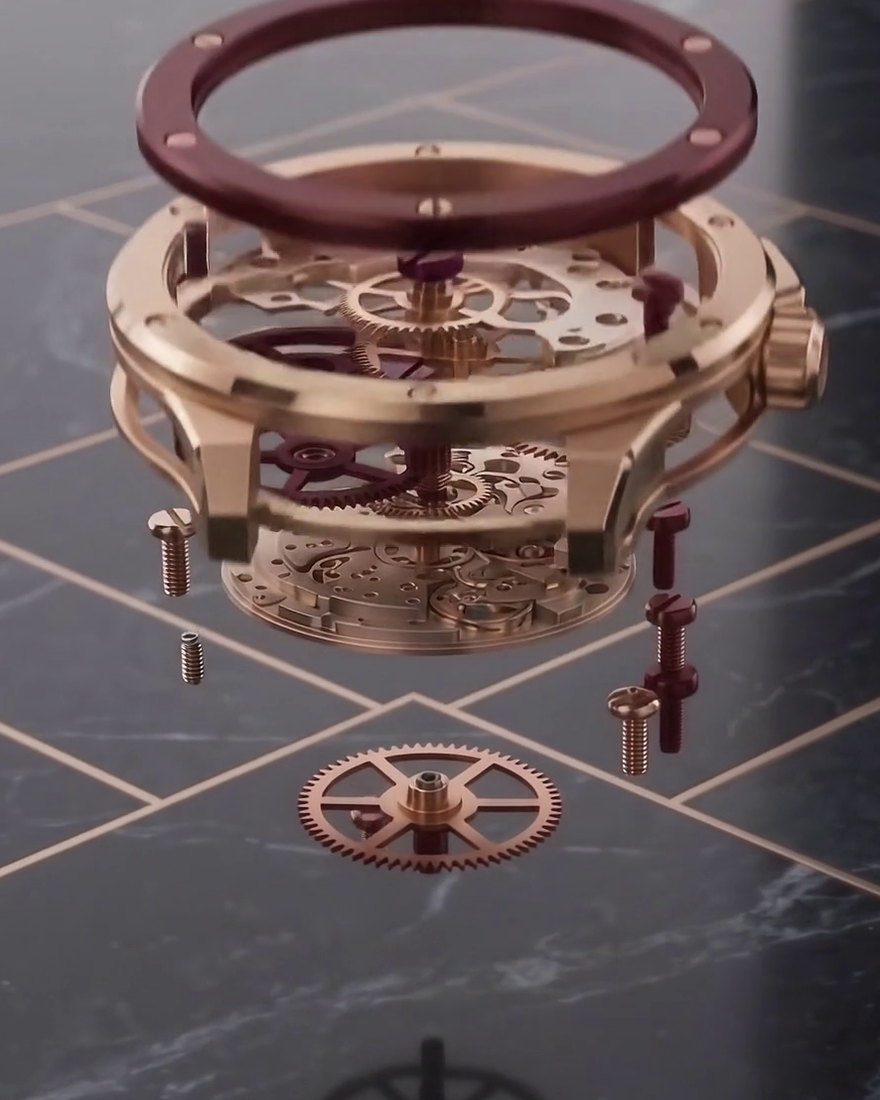
01
Case
The case starts as a solid billet and loses about four fifths of its weight on the way to 44 mm across and 12.9 mm thick. Eleven operations on the mill, six hours of cutting, then the brushing and the polishing by hand. Titanium holds a brushed grain best. Rose gold and king gold take a deeper polish and keep it longer, and they also scratch sooner, which we would rather say before you order than after.
44 mm · 11 operations · 6 hours on the mill
-
02
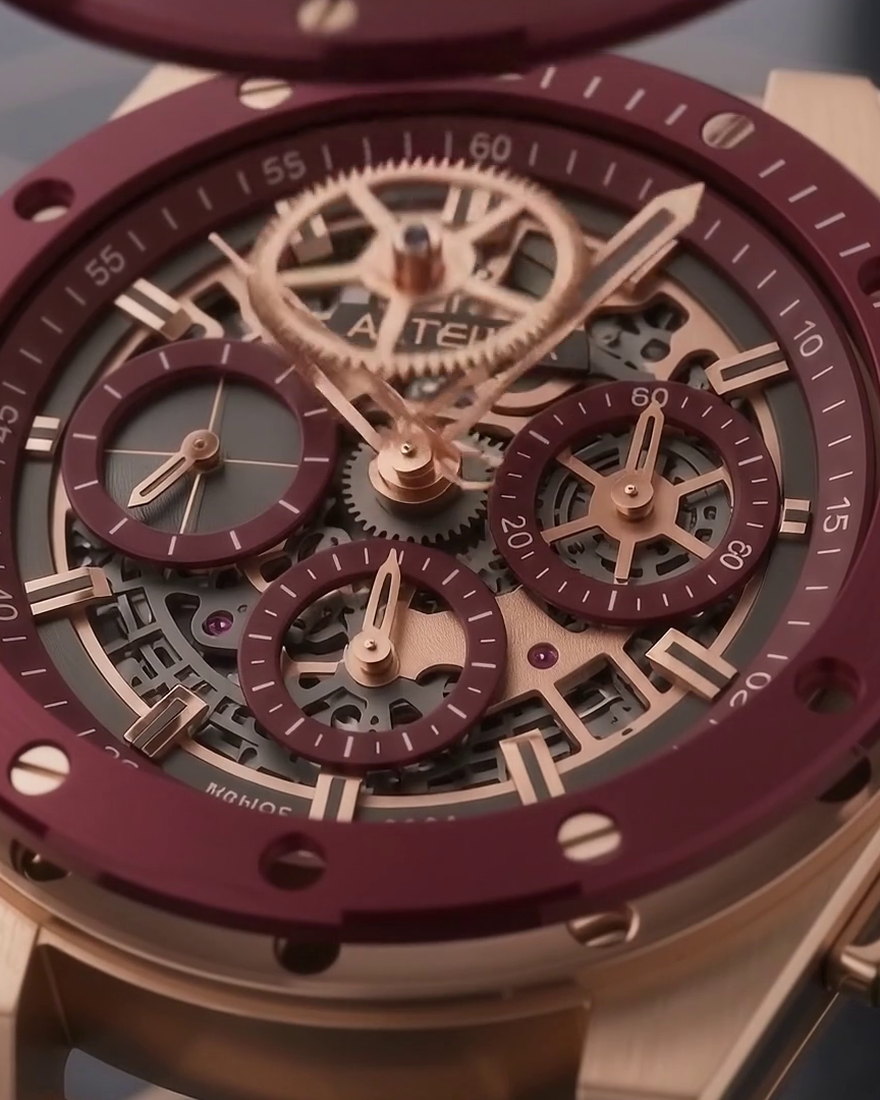
Dial
Ours is cut away rather than printed, so what you read the time against is the movement itself. That costs us. Every opening makes an edge, every edge is chamfered by hand, and a slip at this stage scraps a part that already carries forty hours. The white dial on Frost is the hardest of the twelve, because a pale ground shows every one of those edges and forgives none of them.
0.6 mm thick · 41 openings · chamfered by hand
-
03
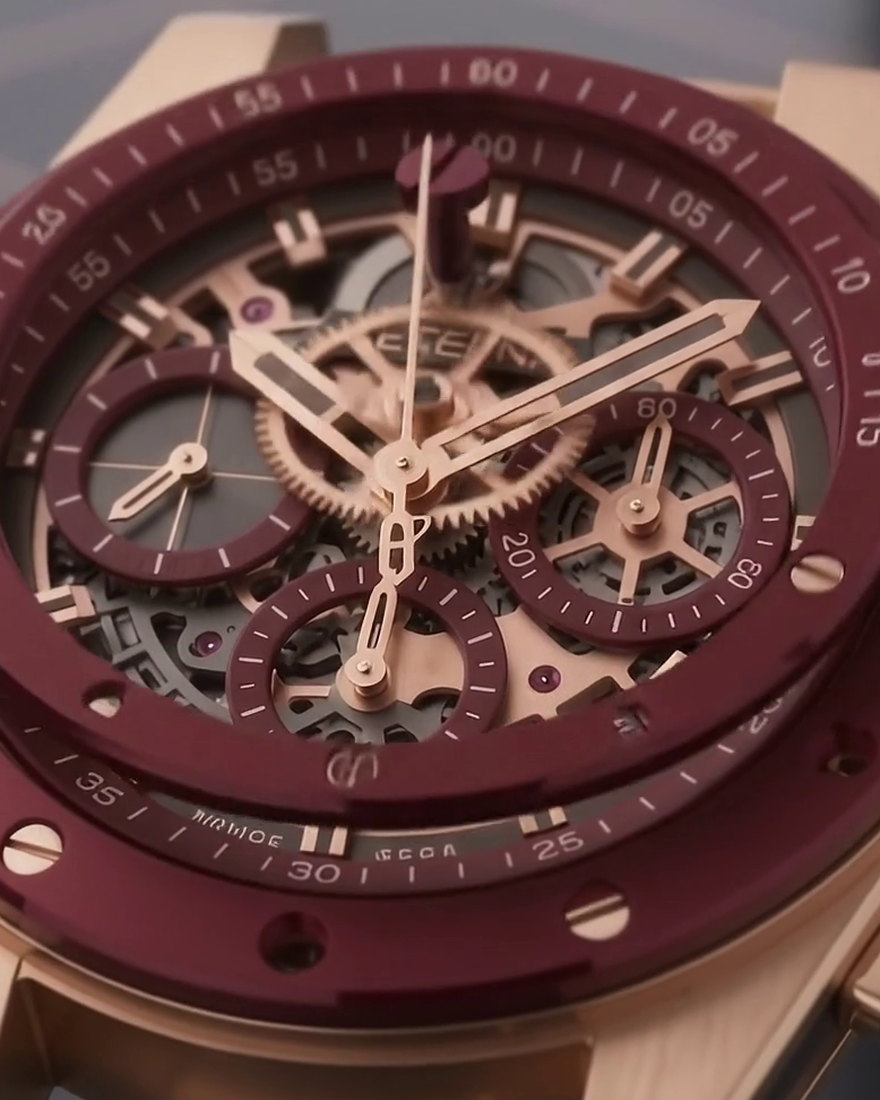
Hands
A full set weighs less than a grain of rice and takes twenty-seven minutes. Each hand is cut, chamfered along both long edges, then drawn across a tin lap until the flank throws light in one direction and goes black in every other. On Nocturne and Garnet the hands are rose gold on a titanium case, the only place in the collection where two metals are allowed to meet.
9 minutes a hand · 3 hands · polished on tin
-
04
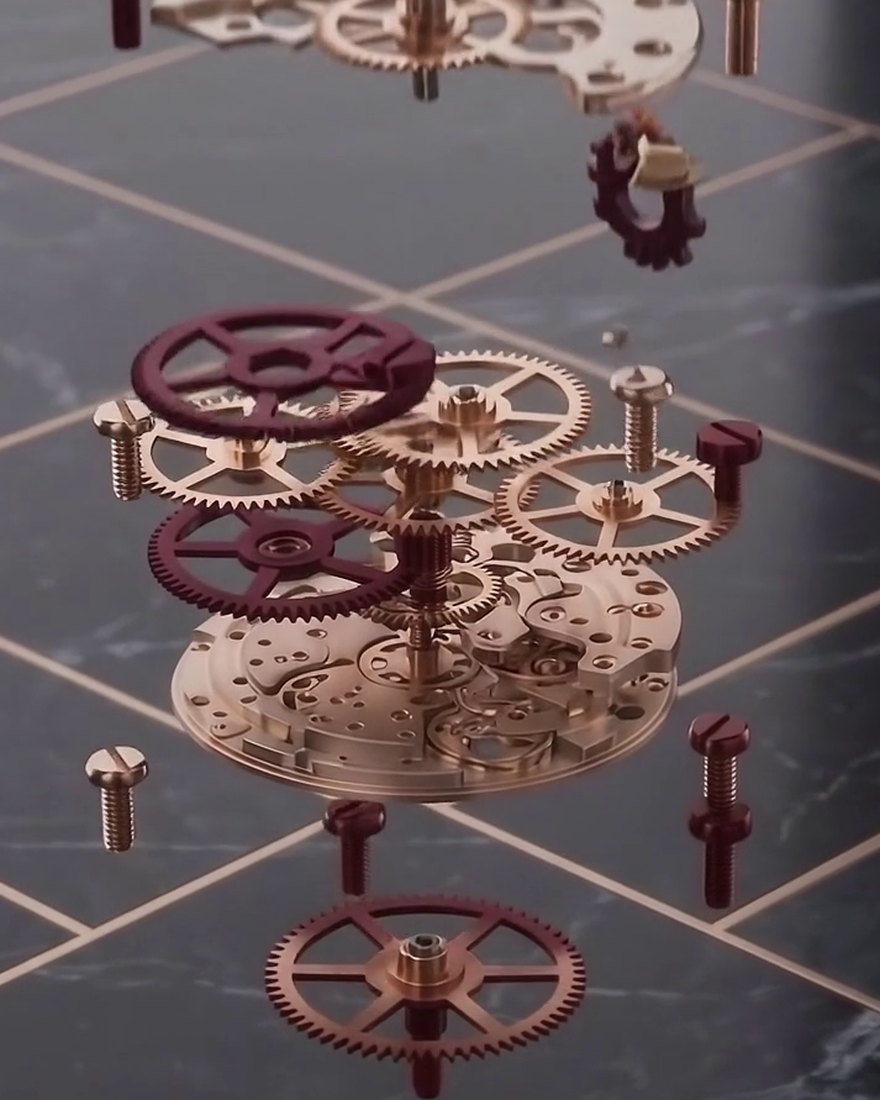
Movement
Calibre 312 is hand wound, runs at 4 Hz and holds seventy-two hours on a single barrel. It was drawn in 1998 and revised eleven times, and not one revision added a part. The chronograph runs on a column wheel with a vertical clutch, which is why the seconds hand starts from rest without the small jump a lateral coupling gives you.
312 parts · 37 jewels · 28,800 beats an hour
-
05
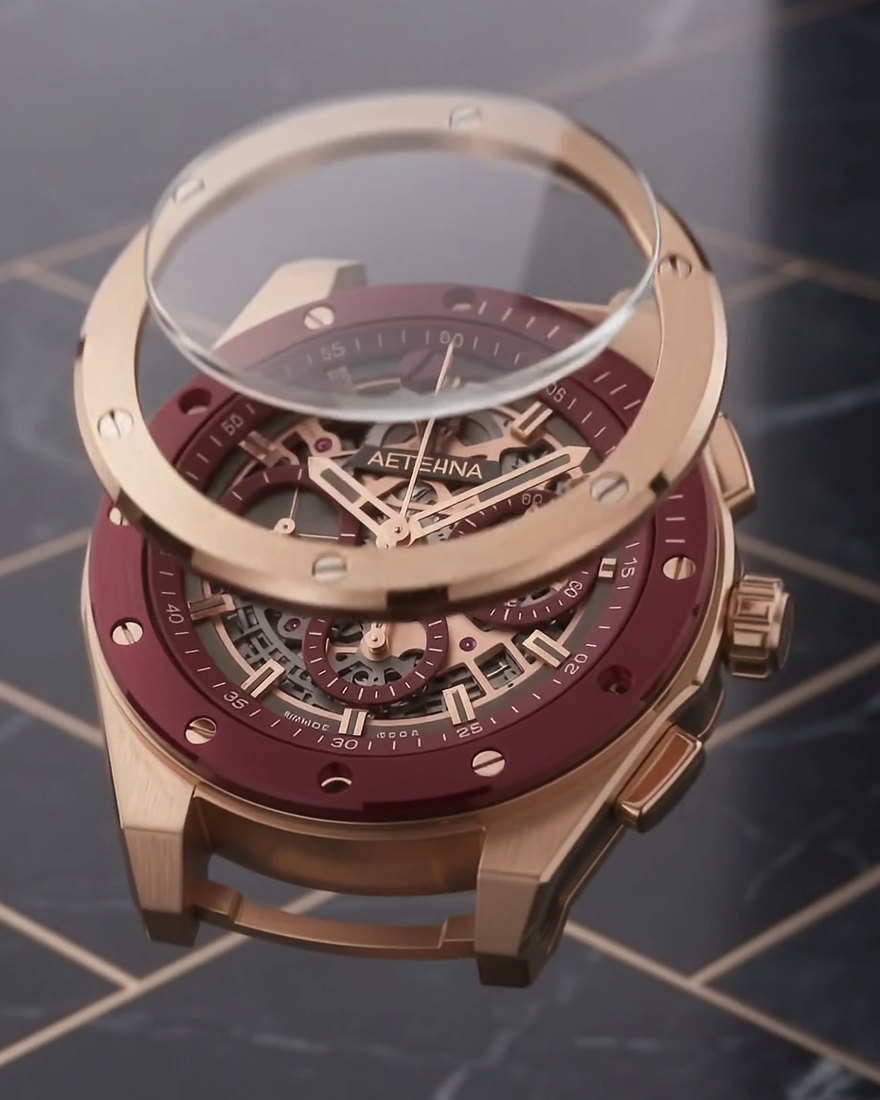
Crystal
Sapphire at the front and sapphire at the back, anti reflective on all four faces. Nine hours of grinding and polishing per crystal, and the coating is the colourless kind rather than the cheaper blue, so the dial colour you chose is the dial colour you see at every angle. There is nothing on this watch you are not allowed to look at.
9 hours a crystal · 4 coated faces · front and back
-
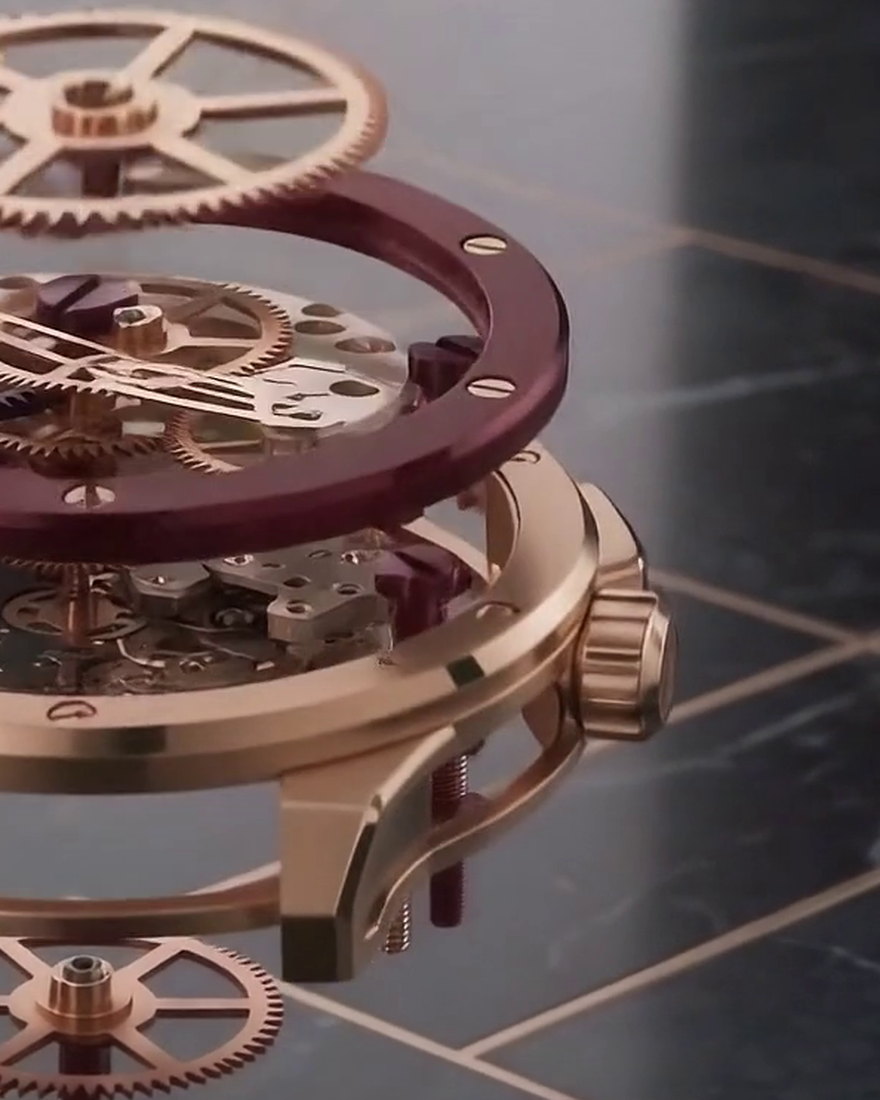
06
Crown
The only part you touch every day, and the only one that has to stay waterproof while it moves. Three seals, a knurl cut deep enough to grip with wet hands, and a thread that takes two and a half turns to close. Every case is pressure tested to 100 metres, one by one, not one in fifty off the batch.
100 metres · 3 seals · every case tested
-
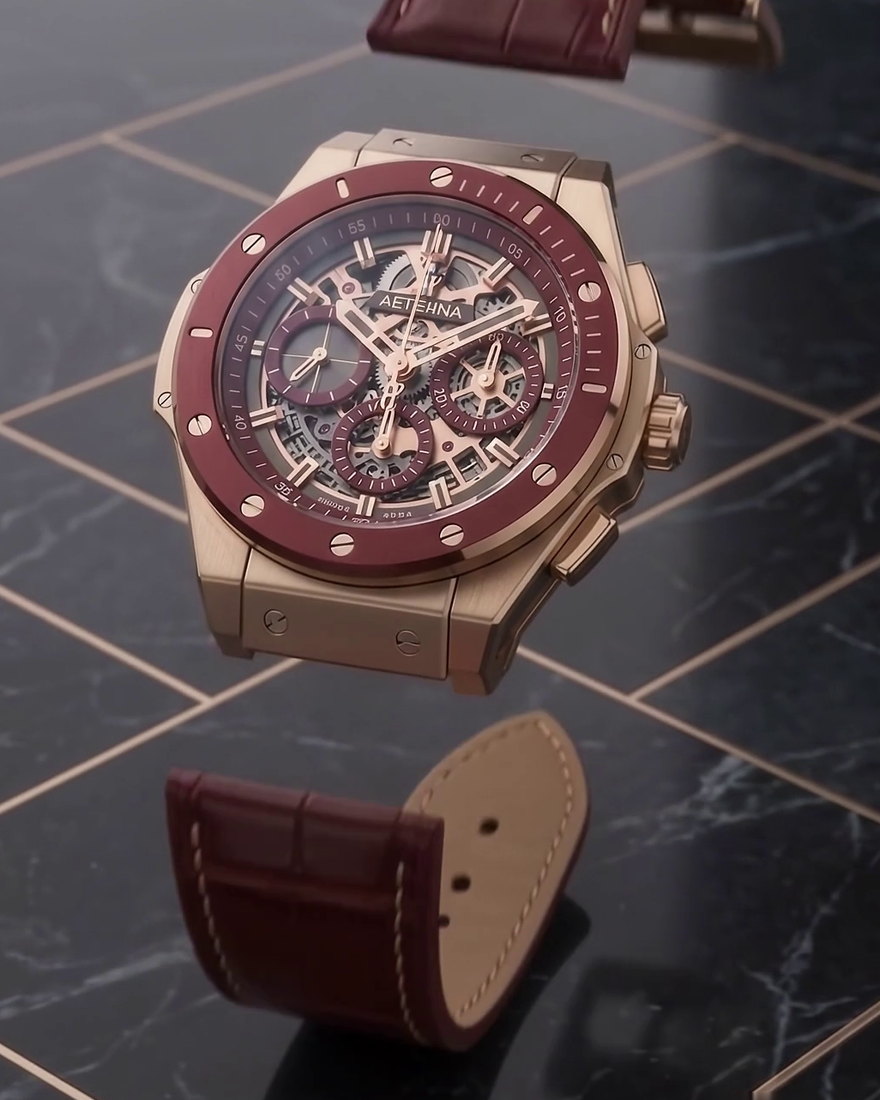
07
Strap
Alligator hide over vulcanised rubber, so the side against your skin takes sweat and salt water and the side the world sees does not care. We cut it to your wrist rather than to a size chart: send us a measurement, or come to Geneva and we take it. A replacement is $380 and we keep your pattern on file for as long as you own the watch.
Alligator over rubber · cut to your wrist · $380 to replace
-
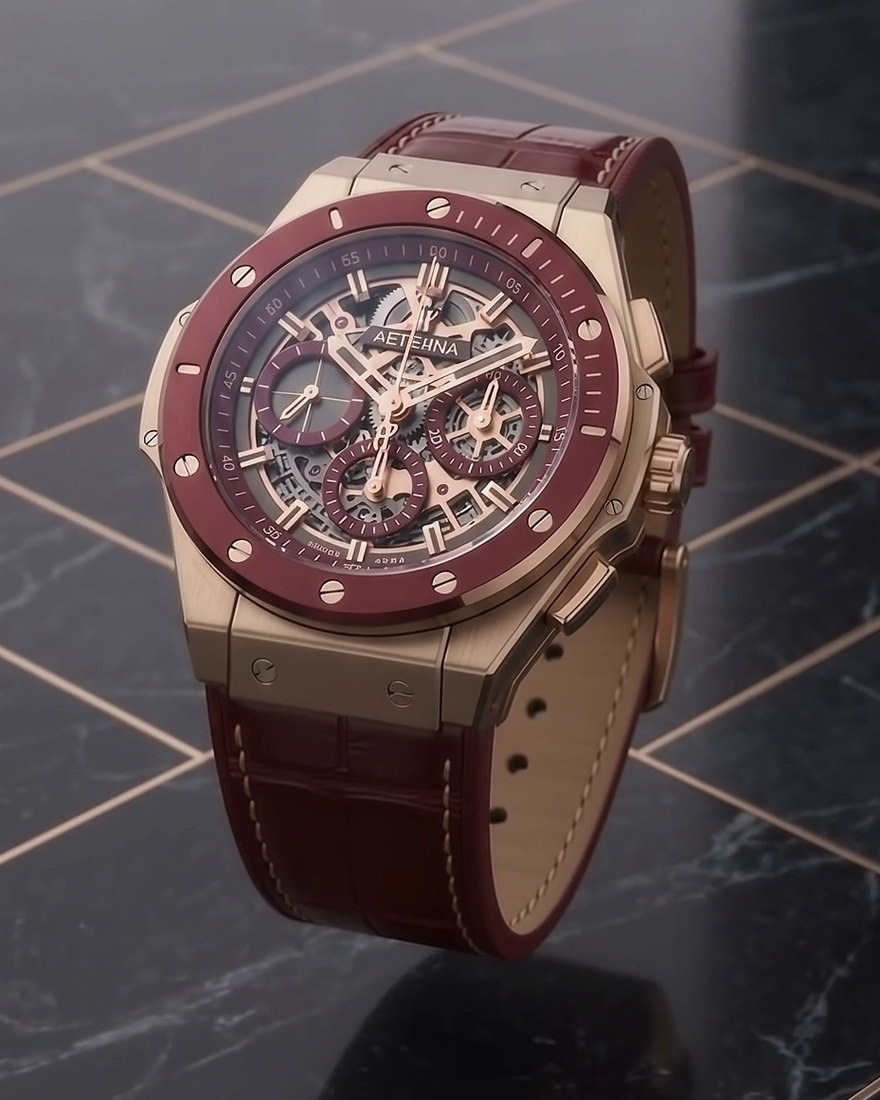
08
Finishing
Thirty-one hours a watch, spent on surfaces most owners will never see. Every bridge edge is chamfered at forty-five degrees and then black polished, which means working the steel against a zinc plate until it reflects nothing at all and reads as pure black from one angle and mirror bright from the next. A machine can cut a chamfer. It cannot turn an inward angle, and the Calibre 312 has nineteen of them.
31 hours a watch · 19 inward angles · black polished on zinc
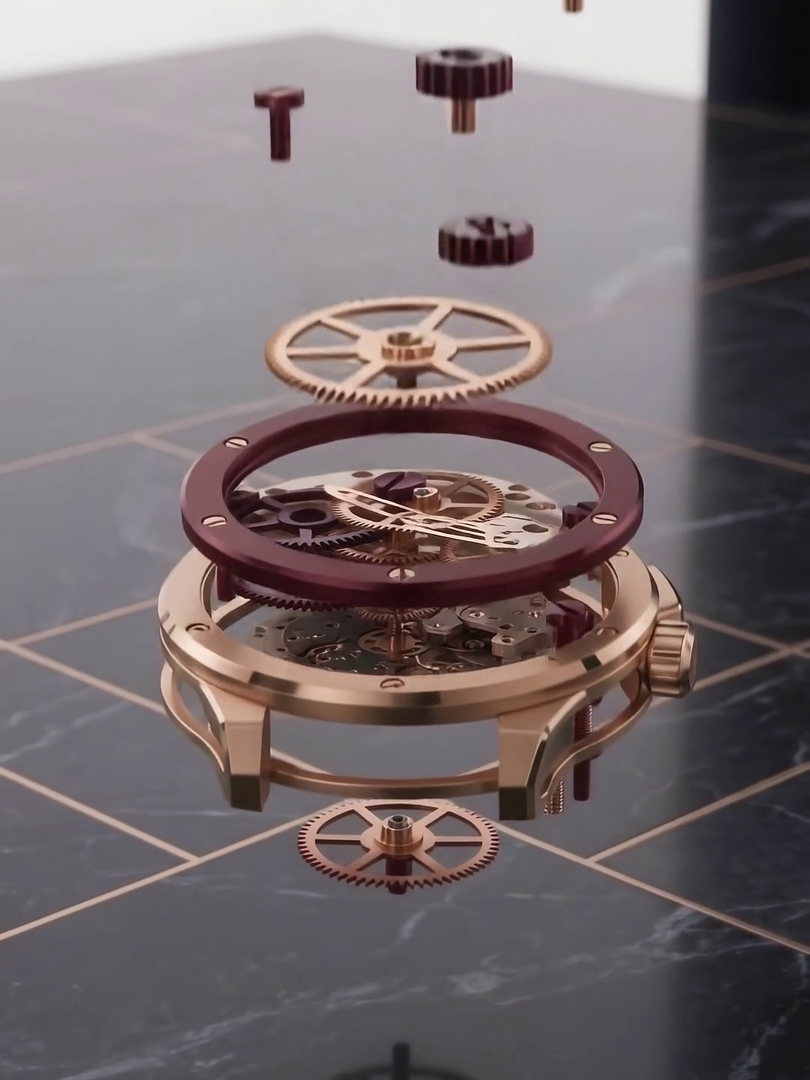
The bench
Four people, and the hours they spend.
Four watchmakers, four benches, one room on the first floor of a building in Plainpalais. We have never opened a second workshop and we do not intend to.
Thirty-one of the hours in every Chronographe 312 go on finishing: chamfering, black polishing, straight graining, and the circular graining on the plate that nobody sees once the movement is cased. It is the part of the work that adds no function at all. It is also the part that tells you, forty years from now, whether the watch was made carefully.
The four of them have been here between nine and thirty-four years. When one retires, the person replacing them spends two years at the next bench before they touch a movement that will ship. That is slow, and it is the reason we make three hundred and twelve watches rather than three thousand.
- Bench one
- Ines Faucher. Wheels, pinions and the going train. Eleven years.
- Bench two
- Otto Brühl. Chronograph works, column wheel and clutch. Twenty-seven years.
- Bench three
- Sanne de Wit. Chamfering, black polish, final finish. Nine years.
- Bench four
- Marc Aubry. Casing, adjustment and the signature. Thirty-four years.
The movement
Wind it.
Press and hold the crown. Every Chronographe 312 is wound this way, by the person wearing it, about forty turns from empty to full. Let go early and it settles back, exactly as the real one does.
There is no rotor in a Calibre 312 and there never will be. An automatic winding mass sits over the movement and hides the half of it we spent thirty-one hours finishing. Hand winding costs you fifteen seconds on a Monday and gives you the whole drawing for the rest of the week.
- Calibre 312
- 4 Hz, 28,800 beats an hour
- 72 hours of power reserve
- 312 parts, 37 jewels
Twelve references
The same 312 parts, twelve ways to wear them.
One movement in every one. Titanium, rose gold or king gold, twelve dials, three hundred and twelve pieces. When the last one ships the tooling comes off the line and the reference closes.